


Hey there! As a supplier of glue - spraying systems, I often get asked how these systems control the amount of glue sprayed. It's a crucial question, especially for businesses that rely on precise glue application for their production processes. In this blog, I'll break down the key factors and mechanisms involved in controlling the glue - spraying volume.
Understanding the Basics of Glue - spraying Systems
Before we dive into the control mechanisms, let's have a quick overview of how glue - spraying systems work. At the core, a glue - spraying system is designed to apply a specific amount of glue onto a substrate, whether it's cardboard, wood, or other materials. The system typically consists of a glue reservoir, a pump, a spraying nozzle, and a control unit.
The glue is stored in the reservoir, and the pump is responsible for moving the glue from the reservoir to the nozzle. The nozzle then atomizes the glue and sprays it onto the target surface. The control unit plays a vital role in regulating the entire process, including the amount of glue being sprayed.
Factors Affecting Glue - spraying Amount
Pressure
One of the primary factors that influence the amount of glue sprayed is the pressure within the system. The pump creates pressure to push the glue through the nozzle. By adjusting the pressure, we can control the flow rate of the glue. Higher pressure generally results in a larger amount of glue being sprayed, while lower pressure reduces the flow.
For example, if you're working on a project that requires a thin layer of glue, you can set the pump to a lower pressure. On the other hand, for applications that need a thicker layer, increasing the pressure will do the trick. However, it's important to note that excessive pressure can cause the glue to splatter or form uneven patterns, so finding the right balance is crucial.
Nozzle Design
The design of the spraying nozzle also has a significant impact on the amount of glue sprayed. Different nozzles have different spray patterns and flow rates. Some nozzles are designed to produce a wide, fan - shaped spray, while others create a narrow, concentrated stream.
A nozzle with a larger orifice will generally allow more glue to pass through, resulting in a higher spraying amount. Conversely, a nozzle with a smaller orifice restricts the flow and reduces the amount of glue. Additionally, the internal geometry of the nozzle can affect the atomization of the glue, which in turn influences how it spreads on the surface.


When selecting a nozzle for your glue - spraying system, consider the specific requirements of your application. If you need to cover a large area evenly, a wide - spray nozzle might be the best choice. For more precise applications, a narrow - stream nozzle could be more suitable.
Speed of the Substrate
The speed at which the substrate moves under the spraying nozzle is another important factor. If the substrate moves too quickly, the amount of glue applied per unit area will be less. Conversely, a slower - moving substrate will receive more glue.
Let's say you're using a glue - spraying system to seal cardboard boxes. If the boxes are moving rapidly on a conveyor belt, you may need to increase the pressure or adjust the nozzle to ensure an adequate amount of glue is applied. On the other hand, if the production line is running at a slower pace, you can reduce the glue - spraying rate to avoid over - application.
Control Mechanisms in Glue - spraying Systems
Manual Control
Some glue - spraying systems offer manual control options. This allows operators to adjust the pressure, nozzle settings, and other parameters based on their experience and the specific requirements of each job. Manual control is often used in small - scale operations or when dealing with custom projects where the spraying requirements can vary significantly.
For example, an operator might use a pressure gauge to monitor and adjust the pressure of the glue pump. They can also manually select different nozzles or change the height of the nozzle above the substrate to achieve the desired spraying amount and pattern.
Automatic Control
In more advanced glue - spraying systems, automatic control is the norm. These systems use sensors and feedback mechanisms to maintain a consistent and precise amount of glue sprayed.
One common type of automatic control is based on flow sensors. These sensors measure the actual flow rate of the glue and send this information to the control unit. The control unit then adjusts the pump speed or pressure to ensure that the flow rate matches the set value.
Another type of automatic control uses proximity sensors to detect the presence of the substrate. When the substrate passes under the spraying nozzle, the system automatically starts spraying and adjusts the amount of glue based on pre - programmed settings. This ensures that glue is only applied when needed and that the correct amount is used.
Integration with Other Equipment
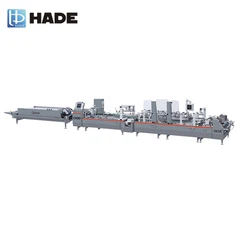
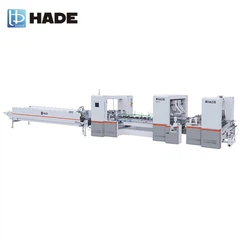
Our glue - spraying systems can be integrated with other equipment to enhance the overall production process. For instance, they can be combined with a Grinder Used On Folder Gluer. This grinder can prepare the surface of the substrate before glue application, ensuring better adhesion. The glue - spraying system can then be precisely calibrated to apply the right amount of glue on the prepared surface.
We also offer integration with an Automatic Box Stacker. After the glue is applied and the boxes are folded, the automatic box stacker can neatly stack them, improving the efficiency of the packaging process.
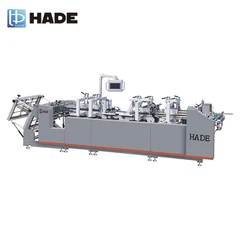
In addition, our glue - spraying systems can work in tandem with an Inkject and Turnovermachine. This machine can perform additional operations such as injecting ink or turning over the substrate, and the glue - spraying system can be synchronized to apply glue at the appropriate time.
Importance of Precise Glue - spraying Control
Precise control of the amount of glue sprayed is essential for several reasons. Firstly, it ensures product quality. If too little glue is applied, the bond between the materials may be weak, leading to product failures. On the other hand, over - applying glue can cause mess, increase costs, and may even affect the appearance of the final product.
Secondly, precise control helps in cost - savings. By using only the necessary amount of glue, businesses can reduce waste and lower their production costs. This is especially important in large - scale manufacturing operations where even a small reduction in glue usage can result in significant savings over time.
Contact Us for Your Glue - spraying Needs
If you're in the market for a reliable glue - spraying system that offers precise control over the amount of glue sprayed, look no further. Our systems are designed with the latest technology and are built to meet the diverse needs of different industries. Whether you're in the packaging, woodworking, or automotive industry, we have a solution for you.
Contact us today to discuss your specific requirements and let's start a conversation about how our glue - spraying systems can improve your production process. We're here to help you achieve better results and boost your bottom line.
References
- "Industrial Glue - spraying Technologies" by John Smith, 2020
- "Precision Control in Adhesive Application" by Jane Doe, 2021