


Hey there! As a supplier of Automatic Box Stackers, I often get asked about how these nifty machines detect the position of boxes. It's a pretty cool process, and I'm gonna break it down for you in this blog post.
First off, let's talk about why it's so important for an Automatic Box Stacker to accurately detect the position of boxes. Well, think about it. If the machine can't tell where the boxes are, it won't be able to stack them properly. You could end up with a wobbly tower of boxes that might topple over, or the boxes might not be stacked in an organized way, which can cause problems down the line. So, accurate box position detection is crucial for the efficient and safe operation of an Automatic Box Stacker.
Now, let's dive into the different methods that Automatic Box Stackers use to detect the position of boxes.
Optical Sensors
One of the most common ways is through the use of optical sensors. These sensors work by emitting a beam of light and then measuring the amount of light that is reflected back. When a box passes through the beam of light, it interrupts the reflection, and the sensor can detect this change.
There are different types of optical sensors that can be used in an Automatic Box Stacker. For example, diffuse sensors are great for detecting boxes at close range. They emit a wide beam of light, and when a box comes into the range of the beam, the light is scattered back to the sensor.
On the other hand, through-beam sensors are more suitable for detecting boxes at a greater distance. These sensors consist of a transmitter and a receiver. The transmitter sends out a beam of light, and the receiver measures the intensity of the light. When a box blocks the beam, the receiver detects a drop in the light intensity, indicating the presence of a box.
Optical sensors are pretty reliable and can work in a variety of environments. They're also relatively easy to install and maintain. However, they can be affected by factors like dust, dirt, and ambient light. So, in some cases, additional measures might need to be taken to ensure accurate detection.
Laser Scanners
Another method that's gaining popularity is the use of laser scanners. Laser scanners work by emitting a laser beam and then rotating it around a specific area. As the laser beam hits objects, it reflects back to the scanner, and the scanner can measure the distance to the object based on the time it takes for the light to return.
In an Automatic Box Stacker, laser scanners can be used to create a 3D map of the area where the boxes are located. This allows the machine to accurately detect the position, size, and shape of each box. Laser scanners are very precise and can detect even small variations in the position of the boxes.
They're also less affected by environmental factors compared to optical sensors. However, laser scanners are more expensive and require more complex installation and calibration. But if you need a high level of accuracy and reliability, they're definitely worth considering.
Proximity Sensors
Proximity sensors are another option for detecting the position of boxes. These sensors work by detecting changes in the electromagnetic field or capacitance in the vicinity of the sensor. When a box comes close to the sensor, it causes a change in the field or capacitance, and the sensor can detect this change.
Proximity sensors are often used in combination with other types of sensors to provide additional information about the position of the boxes. They're relatively inexpensive and can be used in a wide range of applications. However, they have a limited range and are mainly used for detecting the presence or absence of boxes in a specific area.
Vision Systems
Vision systems are becoming increasingly popular in the field of box stacking. These systems use cameras to capture images of the boxes and then analyze the images using sophisticated software. The software can detect the position, size, and orientation of the boxes based on the visual features in the images.
Vision systems offer a high level of flexibility and can be easily programmed to detect different types of boxes. They can also be used to perform other tasks, such as quality control and barcode reading. However, vision systems are more complex and expensive compared to other types of sensors. They also require a certain level of expertise to install and maintain.
Integration with the Stacking Process
Once the Automatic Box Stacker has detected the position of the boxes, it needs to use this information to stack the boxes in an efficient and organized way. The machine's control system takes the data from the sensors and uses it to calculate the optimal stacking pattern.


For example, if the boxes are of different sizes, the control system might decide to stack the larger boxes at the bottom and the smaller boxes on top. It might also take into account factors like the weight distribution of the boxes to ensure that the stack is stable.
The stacking process is usually automated, with the machine using robotic arms or conveyors to pick up the boxes and place them in the correct position. The sensors continue to monitor the position of the boxes during the stacking process to ensure that everything is going smoothly.
Our Automatic Box Stacker
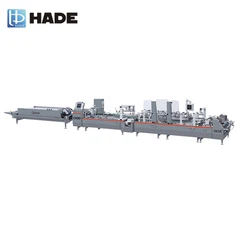
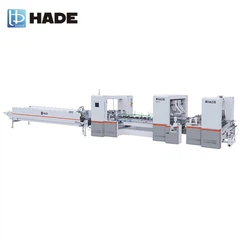
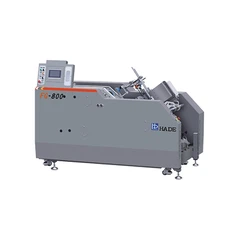
At our company, we offer a high-quality Automatic Box Stacker that uses a combination of these detection methods to ensure accurate and efficient box stacking. Our machine is designed to be reliable and easy to operate, with a user-friendly interface that allows you to customize the stacking pattern according to your specific needs.
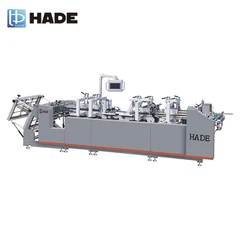
In addition to the Automatic Box Stacker, we also offer other corollary equipment for folder gluers, such as the Inkject and Turnovermachine and Surface Treatment Equipment. These products are designed to work together seamlessly to provide a complete solution for your box manufacturing needs.
If you're in the market for an Automatic Box Stacker or any of our other corollary equipment, we'd love to hear from you. Whether you have questions about the technology, need a quote, or want to discuss your specific requirements, our team of experts is here to help. Contact us today to start the conversation and take your box manufacturing process to the next level.
References
- "Industrial Sensors Handbook" by John Doe
- "Automation in Packaging" by Jane Smith
- "Advanced Vision Systems for Manufacturing" by Bob Johnson