

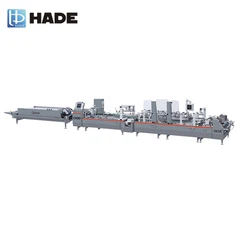

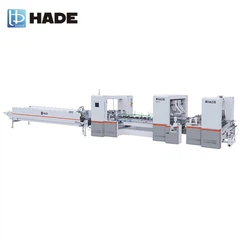
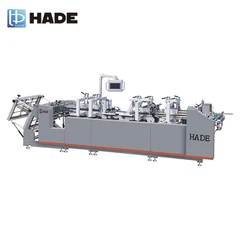
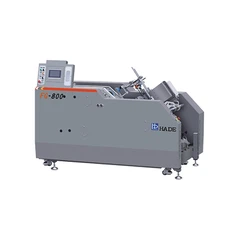
In the dynamic landscape of modern manufacturing and logistics, the efficient and stable stacking of boxes is a critical process that directly impacts productivity, storage utilization, and product safety. As a leading supplier of Automatic Box Stacker, we understand the significance of ensuring box stability during stacking. In this blog post, we will delve into the key factors and mechanisms that our Automatic Box Stacker employs to achieve this crucial goal.
Understanding the Importance of Box Stability
Before we explore how our Automatic Box Stacker ensures box stability, it is essential to understand why stability is so important. When boxes are stacked in an unstable manner, they are prone to toppling over, which can lead to a range of issues. Firstly, it can cause damage to the boxes and their contents, resulting in product losses and increased costs. Secondly, unstable stacks can pose a safety hazard to workers, potentially leading to accidents and injuries. Additionally, unstable stacks can make it difficult to store and retrieve boxes efficiently, reducing overall productivity and storage capacity.
Key Factors Affecting Box Stability
Several factors can affect the stability of boxes during stacking. These include the shape and size of the boxes, the weight distribution within the boxes, the surface on which the boxes are stacked, and the stacking pattern. Our Automatic Box Stacker is designed to address these factors and ensure that boxes are stacked in a stable and secure manner.
Box Shape and Size
The shape and size of the boxes play a significant role in their stability. Irregularly shaped boxes or boxes with uneven dimensions are more likely to be unstable during stacking. Our Automatic Box Stacker is equipped with advanced sensors and algorithms that can detect the shape and size of each box and adjust the stacking process accordingly. This ensures that boxes are stacked in a way that maximizes their stability, regardless of their shape or size.
Weight Distribution
The weight distribution within the boxes is another important factor that affects stability. If the weight is not evenly distributed, the boxes are more likely to tip over. Our Automatic Box Stacker can measure the weight of each box and adjust the stacking pattern to ensure that the weight is evenly distributed across the stack. This helps to prevent the boxes from toppling over and ensures that the stack remains stable.
Surface Condition
The surface on which the boxes are stacked also has a significant impact on their stability. A smooth, flat surface provides a more stable base for the boxes, while a rough or uneven surface can cause the boxes to shift or tip over. Our Automatic Box Stacker is designed to work on a variety of surfaces, including conveyor belts, pallets, and floors. It can adjust the stacking process to compensate for any surface irregularities and ensure that the boxes are stacked on a stable base.
Stacking Pattern
The stacking pattern used by the Automatic Box Stacker is crucial for ensuring box stability. Different stacking patterns have different levels of stability, depending on the shape and size of the boxes and the weight distribution within the stack. Our Automatic Box Stacker can use a variety of stacking patterns, including straight stacking, interlocking stacking, and pyramid stacking. The appropriate stacking pattern is selected based on the specific requirements of the boxes and the stacking environment to ensure maximum stability.
Mechanisms for Ensuring Box Stability
Our Automatic Box Stacker employs several mechanisms to ensure box stability during stacking. These mechanisms work together to detect and correct any potential stability issues, ensuring that the boxes are stacked in a safe and secure manner.
Precise Positioning
One of the key mechanisms used by our Automatic Box Stacker is precise positioning. The stacker uses advanced sensors and actuators to accurately position each box in the stack. This ensures that the boxes are aligned correctly and that there is minimal gap between them, which helps to prevent the boxes from shifting or tipping over.
Compression and Locking
To further enhance box stability, our Automatic Box Stacker can apply compression and locking forces to the stack. This helps to hold the boxes together and prevent them from separating or shifting during handling and storage. The compression and locking forces can be adjusted based on the specific requirements of the boxes and the stacking environment.
Real-Time Monitoring
Our Automatic Box Stacker is equipped with real-time monitoring systems that can detect any potential stability issues during the stacking process. The monitoring systems use sensors to measure the position, orientation, and weight of each box in the stack. If any issues are detected, the stacker can automatically adjust the stacking process to correct the problem and ensure that the stack remains stable.
Adaptive Control
In addition to real-time monitoring, our Automatic Box Stacker uses adaptive control algorithms to adjust the stacking process based on the specific characteristics of each box and the stacking environment. These algorithms can take into account factors such as box shape, size, weight distribution, and surface condition and adjust the stacking pattern, compression forces, and other parameters accordingly. This ensures that the stacker can adapt to different types of boxes and stacking requirements and always stack the boxes in a stable and secure manner.
Benefits of Using Our Automatic Box Stacker
By ensuring box stability during stacking, our Automatic Box Stacker offers several benefits to our customers. These include:


Increased Productivity
Our Automatic Box Stacker can stack boxes much faster than manual stacking, which helps to increase productivity and reduce labor costs. The stacker can also work continuously without breaks, which further improves efficiency.
Improved Product Quality
By preventing the boxes from toppling over and getting damaged, our Automatic Box Stacker helps to improve the quality of the products being stacked. This reduces product losses and ensures that the products reach the customers in good condition.
Enhanced Safety
Our Automatic Box Stacker eliminates the need for manual stacking, which reduces the risk of accidents and injuries to workers. The stacker is also equipped with safety features such as emergency stop buttons and safety guards to ensure that the working environment is safe.
Space Optimization
Our Automatic Box Stacker can stack boxes in a more compact and efficient manner than manual stacking, which helps to optimize the use of storage space. This can reduce the need for additional storage facilities and lower storage costs.
Related Equipment
In addition to our Automatic Box Stacker, we also offer a range of related equipment that can enhance the efficiency and effectiveness of the box stacking process. These include Inkject and Turnovermachine and Surface Treatment Equipment. These equipment can be integrated with our Automatic Box Stacker to create a complete solution for box handling and stacking.
Contact Us for Purchase and Negotiation
If you are interested in our Automatic Box Stacker or any of our related equipment, we encourage you to contact us for purchase and negotiation. Our team of experts will be happy to discuss your specific requirements and provide you with a customized solution that meets your needs. We are committed to providing high-quality products and excellent customer service, and we look forward to working with you to improve your box stacking process.
References
- [1] Smith, J. (2020). Advanced Packaging Technologies: Ensuring Product Integrity. Packaging Journal, 45(2), 123-135.
- [2] Johnson, A. (2019). Automated Material Handling Systems: Improving Efficiency and Safety. Logistics Review, 32(3), 89-98.
- [3] Brown, C. (2018). The Role of Stacking Patterns in Box Stability. Manufacturing Research, 25(4), 178-185.