

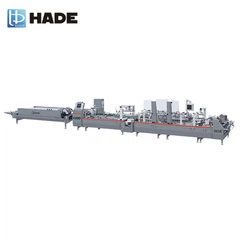

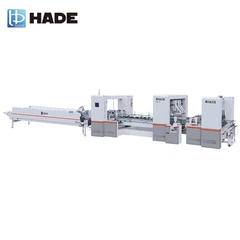
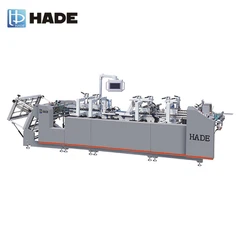
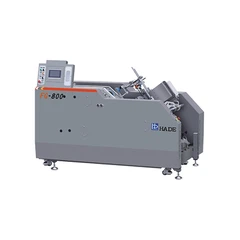
Hey there! As a supplier of Automatic Box Stackers, I've seen my fair share of issues that customers often run into. In this blog, I'm gonna share some of the common problems with Automatic Box Stackers and how you can deal with them.
1. Alignment Issues
One of the most frequent problems we hear about is alignment. When boxes aren't stacked properly, it can lead to a whole bunch of other issues. Misaligned boxes might fall over during the stacking process or make the stack unstable. This could be due to a few reasons.
The conveyor belt that feeds the boxes into the stacker might be misaligned itself. If the belt isn't running straight, the boxes won't be delivered in the right position. Another cause could be the sensors on the stacker. These sensors are supposed to detect the position of the boxes and guide them into place. If they're dirty or malfunctioning, they won't give accurate readings, and the boxes won't stack correctly.
To fix alignment problems, you first need to check the conveyor belt. Make sure it's properly tensioned and running smoothly. You can also clean the sensors regularly to ensure they're working well. If the problem persists, it might be a good idea to call in a technician to take a closer look.
2. Jamming Problems
Jams are another headache for users of Automatic Box Stackers. Boxes can get stuck in the machine, causing it to stop working. This can happen when the boxes are too large or too small for the stacker's specifications. If the boxes are too big, they might not fit through the feeding mechanism, and if they're too small, they could get lost or stuck in the gaps.
Overloading the stacker can also lead to jams. If you're trying to stack too many boxes at once, the machine might not be able to handle the volume, and the boxes will pile up and cause a blockage.
To prevent jams, make sure you're using boxes that are the right size for your stacker. Check the manufacturer's guidelines to find out the recommended box dimensions. Also, avoid overloading the machine. If you need to stack a large number of boxes, do it in smaller batches.
3. Software Glitches
In today's digital age, most Automatic Box Stackers are controlled by software. And just like any other software, it can have glitches. These glitches can cause the stacker to malfunction, such as stacking boxes in the wrong order or not stopping when it should.
Software glitches can be caused by a variety of factors, including bugs in the program, compatibility issues with other software on your system, or problems with the hardware that runs the software.
If you encounter software glitches, the first thing you should do is try restarting the stacker and the computer that controls it. Sometimes, a simple restart can fix the problem. If that doesn't work, you can try updating the software to the latest version. The manufacturer might have released a patch to fix the glitches. If the issue still persists, you'll need to contact the software support team for further assistance.
4. Wear and Tear
Over time, the parts of an Automatic Box Stacker will experience wear and tear. Components like belts, gears, and motors will gradually deteriorate, which can affect the performance of the machine.
The belts can stretch or break, the gears can become worn down and start to make noise, and the motors can overheat or fail. Regular maintenance is crucial to prevent these problems.


You should lubricate the moving parts regularly to reduce friction and wear. Replace worn-out belts and gears as soon as you notice signs of damage. Also, make sure the motors are properly cooled and that the ventilation system is working well.
5. Incompatibility with Other Equipment
Sometimes, Automatic Box Stackers might not work well with other equipment in your packaging line. For example, if you're using a Surface Treatment Equipment or a Glue-spraying System before the stacker, there could be compatibility issues.
The speed of the other equipment might not match the speed of the stacker, or the boxes might be treated in a way that affects their ability to stack properly. To solve this problem, you need to make sure all the equipment in your packaging line is compatible. You might need to adjust the settings of the stacker or the other equipment to ensure smooth operation.
6. Gluing and Sealing Issues
If your Automatic Box Stacker is used in conjunction with a Glue-spraying System or an Automatic Gluing Pump, you might face gluing and sealing problems. The glue might not be applied evenly, or the boxes might not be sealed properly.
This could be due to a problem with the glue itself, such as it being too thick or too thin. It could also be a problem with the spraying or pumping equipment. Make sure you're using the right type of glue for your boxes and that the equipment is calibrated correctly.
Conclusion
As you can see, there are several common problems that you might encounter when using an Automatic Box Stacker. But don't worry! Most of these issues can be easily prevented or fixed with proper maintenance and a little bit of know-how.
If you're having trouble with your Automatic Box Stacker or if you're thinking about purchasing one, don't hesitate to reach out to us. We're here to help you find the best solution for your packaging needs. Whether it's troubleshooting an existing problem or choosing the right stacker for your business, we've got you covered.
References
- Manufacturer's manuals for Automatic Box Stackers
- Industry reports on packaging equipment issues
- Technical documentation for Surface Treatment Equipment, Glue-spraying System, and Automatic Gluing Pump