

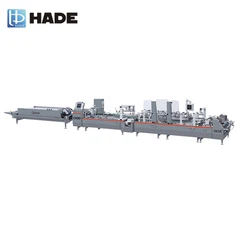

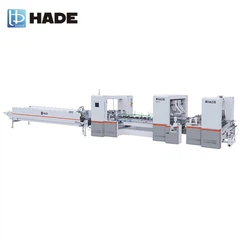
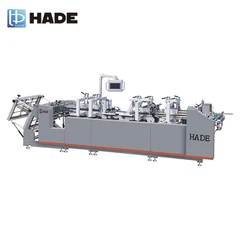
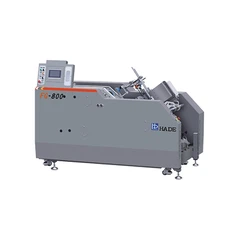
In the world of packaging and printing machinery, vertical feeders play a crucial role in ensuring the smooth and efficient handling of materials. As a supplier of Vertical Feeders, I have witnessed firsthand the importance of each component within these machines. One such component that often goes unnoticed but is of utmost significance is the inverter. In this blog post, I will delve into the functions of the inverter in a vertical feeder and why it is an essential part of the system.
Understanding the Vertical Feeder
Before we explore the role of the inverter, let's first understand what a vertical feeder is and how it operates. A vertical feeder is a device used to feed materials, such as paper, cardboard, or plastic sheets, in a vertical direction. It is commonly used in conjunction with other machinery, such as folder gluers, to ensure a continuous and accurate supply of materials.
The vertical feeder typically consists of a hopper, a feeding mechanism, and a control system. The hopper stores the materials, while the feeding mechanism transports the materials from the hopper to the next stage of the production process. The control system regulates the operation of the feeder, ensuring that the materials are fed at the correct speed and in the correct quantity.
The Role of the Inverter
An inverter, also known as a variable frequency drive (VFD), is an electronic device that controls the speed and torque of an electric motor. In a vertical feeder, the inverter is used to control the speed of the feeding mechanism, which in turn affects the speed at which the materials are fed.
Speed Control
One of the primary functions of the inverter in a vertical feeder is speed control. By adjusting the frequency of the electrical power supplied to the motor, the inverter can vary the speed of the motor. This allows the operator to control the feeding speed of the materials, depending on the requirements of the production process.
For example, if the production process requires a high-speed feeding of materials, the operator can increase the frequency of the inverter, which will increase the speed of the motor and the feeding mechanism. Conversely, if a slower feeding speed is required, the operator can decrease the frequency of the inverter, which will reduce the speed of the motor and the feeding mechanism.


Speed control is essential in a vertical feeder because it allows for precise control of the material flow. This ensures that the materials are fed at the correct speed and in the correct quantity, which helps to prevent jams and other production issues.
Torque Control
In addition to speed control, the inverter also provides torque control. Torque is the rotational force generated by the motor, and it is required to overcome the resistance of the materials being fed. The inverter can adjust the torque output of the motor, depending on the load requirements of the feeding mechanism.
For example, if the materials being fed are heavy or have a high friction coefficient, the inverter can increase the torque output of the motor to ensure that the feeding mechanism can overcome the resistance and feed the materials smoothly. Conversely, if the materials are light or have a low friction coefficient, the inverter can decrease the torque output of the motor to prevent overloading and damage to the motor.
Torque control is important in a vertical feeder because it helps to ensure that the feeding mechanism can handle different types of materials and loads. This makes the vertical feeder more versatile and adaptable to different production requirements.
Energy Efficiency
Another important function of the inverter in a vertical feeder is energy efficiency. Traditional motors operate at a fixed speed, which means that they consume a constant amount of energy regardless of the load requirements. In contrast, an inverter-controlled motor can adjust its speed and torque output based on the load requirements, which helps to reduce energy consumption.
By using an inverter in a vertical feeder, the operator can optimize the energy consumption of the motor, which can result in significant cost savings over time. This is particularly important in industries where energy costs are a major factor in the production process.
Soft Start and Stop
The inverter also provides a soft start and stop function, which is beneficial for the vertical feeder. A soft start allows the motor to gradually ramp up to its operating speed, which reduces the mechanical stress on the motor and the feeding mechanism. This helps to extend the lifespan of the motor and the other components of the vertical feeder.
Similarly, a soft stop allows the motor to gradually slow down to a stop, which reduces the mechanical shock on the motor and the feeding mechanism. This helps to prevent damage to the motor and the other components of the vertical feeder, and it also reduces the risk of material jams and other production issues.
Conclusion
In conclusion, the inverter plays a crucial role in the operation of a vertical feeder. It provides speed control, torque control, energy efficiency, and soft start and stop functions, which are essential for the smooth and efficient handling of materials. As a supplier of Vertical Feeders, I highly recommend the use of an inverter in all vertical feeder applications.
If you are interested in learning more about our Vertical Feeders or other corollary equipment for folder gluers, such as Automatic Gluing Pump and Surface Treatment Equipment, please visit our website Vertical Feeder. We are always happy to discuss your specific requirements and provide you with the best solutions for your production needs. Contact us today to start a procurement negotiation and take your production process to the next level.
References
- "Variable Frequency Drives: Principles and Applications" by Thomas G. Habetler, Ronald G. Harley, and Timothy A. Lipo
- "Electric Motors and Drives: Fundamentals, Types, and Applications" by Austin Hughes and Bill Drury