

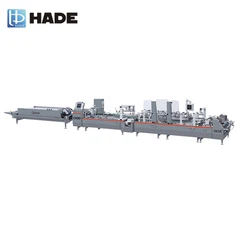

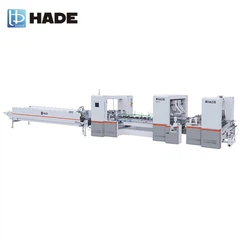
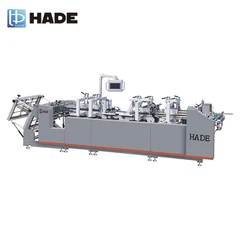
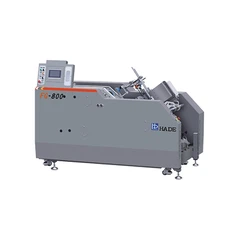
In the realm of packaging production, tray making machines play a pivotal role in creating various types of trays used for a wide range of products. As a trusted tray making machine supplier, we understand the intricate details and components that contribute to the efficient operation of these machines. One such crucial component is the vacuum system, which serves multiple essential functions in a tray making machine.
1. Forming the Tray Shape
The primary function of the vacuum system in a tray making machine is to assist in forming the desired shape of the trays. When the raw material, typically a plastic sheet, is heated to a pliable state, it is placed over a mold. The vacuum system then activates, creating a negative pressure between the plastic sheet and the mold. This negative pressure pulls the plastic sheet tightly against the contours of the mold, allowing it to take on the exact shape of the tray.
For instance, in the production of food trays with specific compartments for different food items, the vacuum system ensures that the plastic sheet conforms precisely to the mold, creating well - defined compartments. This precise forming is essential for ensuring that the trays can hold the products securely and present them in an organized manner. Our Tray Making Machine with 90 Degree Rotation utilizes an advanced vacuum system to achieve accurate and consistent tray forming, even for complex tray designs.
2. Ensuring Uniform Thickness
Another important function of the vacuum system is to help maintain a uniform thickness of the trays during the forming process. As the plastic sheet is drawn onto the mold by the vacuum, it is evenly distributed across the mold surface. This even distribution helps to prevent areas of the tray from being too thick or too thin, which could compromise the structural integrity and functionality of the tray.
A uniform thickness is particularly important for trays that need to withstand a certain amount of weight or pressure. For example, trays used for packaging heavy industrial parts must have a consistent thickness to ensure they can support the weight of the parts without breaking or deforming. Our vacuum systems are designed to provide a balanced and controlled vacuum force, resulting in trays with a uniform thickness throughout.
3. Improving Production Speed
The vacuum system also plays a significant role in improving the production speed of the tray making machine. By quickly and effectively pulling the plastic sheet onto the mold, the vacuum system reduces the time required for the forming process. This allows the machine to produce more trays in a given period, increasing overall productivity.
In addition, the vacuum system enables faster cooling of the formed trays. Once the plastic sheet has taken on the shape of the tray, the vacuum helps to hold it in place while it cools and solidifies. The faster the cooling process, the quicker the trays can be removed from the mold and the machine can start the next cycle. Our Automatic Tray Making Machine is equipped with a high - performance vacuum system that significantly enhances production speed, making it an ideal choice for large - scale tray production.
4. Enhancing Product Quality
The use of a vacuum system in a tray making machine has a direct impact on the quality of the final products. By ensuring accurate forming, uniform thickness, and fast production, the vacuum system helps to produce trays that meet high - quality standards.
High - quality trays are not only more aesthetically pleasing but also more functional. They are less likely to have defects such as air bubbles, wrinkles, or uneven surfaces, which can affect the appearance and performance of the trays. Our tray making machines with advanced vacuum systems are capable of producing trays with a smooth finish and excellent dimensional accuracy, making them suitable for a variety of industries, including food, electronics, and medical.
5. Handling Different Materials
The vacuum system in our tray making machines is designed to work effectively with a wide range of materials. Whether it's polystyrene, polypropylene, PVC, or other thermoplastic materials, the vacuum system can adapt to the specific properties of each material to achieve optimal forming results.
Different materials have different melting points, viscosities, and stretchabilities. The vacuum system can be adjusted to accommodate these differences, ensuring that the plastic sheet is properly formed into trays regardless of the material used. This versatility allows our customers to produce trays for different applications using a single machine, providing them with greater flexibility and cost - effectiveness.
Technical Considerations for the Vacuum System
When designing and using a vacuum system in a tray making machine, several technical considerations need to be taken into account. These include the vacuum level, the flow rate, and the distribution of the vacuum force.
The vacuum level determines the strength of the negative pressure applied to the plastic sheet. A higher vacuum level can provide a stronger pulling force, which is beneficial for forming trays with deep or complex shapes. However, it also requires more energy and may put additional stress on the machine components. Therefore, the vacuum level needs to be carefully adjusted based on the specific requirements of the tray design and the material being used.
The flow rate of the vacuum system affects how quickly the air is removed from between the plastic sheet and the mold. A higher flow rate can speed up the forming process, but it also needs to be balanced with the vacuum level to ensure uniform forming.
The distribution of the vacuum force across the mold surface is crucial for achieving a consistent tray shape and thickness. Our engineers use advanced simulation and testing techniques to optimize the vacuum distribution, ensuring that the plastic sheet is evenly drawn onto the mold.
Maintenance and Troubleshooting
Proper maintenance of the vacuum system is essential for ensuring its reliable operation and the quality of the tray production. Regular maintenance tasks include checking the vacuum pumps, filters, and hoses for any signs of wear or damage, and cleaning or replacing them as needed.


In addition, it's important to monitor the performance of the vacuum system during operation. If there are any issues such as a decrease in vacuum level or an uneven forming of the trays, troubleshooting steps need to be taken. This may involve checking for leaks in the system, adjusting the vacuum settings, or inspecting the mold for any blockages or damage.
Conclusion
In conclusion, the vacuum system is an indispensable component of a tray making machine. It performs multiple functions, including forming the tray shape, ensuring uniform thickness, improving production speed, enhancing product quality, and handling different materials. As a leading tray making machine supplier, we are committed to providing our customers with machines equipped with state - of - the - art vacuum systems that offer high performance, reliability, and versatility.
If you are in the market for a tray making machine and want to learn more about how our vacuum systems can benefit your production, we invite you to contact us for a detailed discussion. Our team of experts will be happy to assist you in choosing the right machine for your specific needs and provide you with comprehensive support throughout the purchasing process.
References
- "Plastic Thermoforming Technology" - A comprehensive guide on the principles and processes of plastic thermoforming, which includes detailed information on the role of vacuum systems in tray making.
- "Industrial Packaging Machinery Handbook" - This handbook provides in - depth knowledge about various types of packaging machinery, including tray making machines and their components, such as vacuum systems.