


What is the power source of a Box Folding and Gluing Machine (e.g., electric, pneumatic)?
As a supplier of Box Folding and Gluing Machines, I often encounter inquiries from customers about the power sources of these essential pieces of equipment. Understanding the power sources is crucial as it directly impacts the machine's performance, efficiency, and overall cost - effectiveness. In this blog, we will explore the common power sources for Box Folding and Gluing Machines, namely electric and pneumatic, and discuss their characteristics, advantages, and disadvantages.
Electric Power Sources
Electricity is one of the most widely used power sources for Box Folding and Gluing Machines. These machines are typically connected to a standard electrical outlet or a dedicated electrical supply system, depending on their power requirements.
Characteristics
- Precise Control: Electric - powered machines offer precise control over various functions. For example, the speed of the conveyor belts, the rotation of the folding and gluing mechanisms can be accurately adjusted. This precision is essential for producing high - quality boxes with consistent dimensions and proper gluing.
- Quiet Operation: Compared to some other power sources, electric machines tend to operate more quietly. This is a significant advantage in a factory environment, as it reduces noise pollution and creates a more comfortable working atmosphere for employees.
- Energy - Efficient: Modern electric Box Folding and Gluing Machines are designed to be energy - efficient. They can adjust their power consumption based on the workload, which helps in reducing overall energy costs over time.
Advantages
- Easy Installation: Electric machines are relatively easy to install. As long as there is a suitable electrical connection available, the machine can be set up quickly. This reduces the downtime during the installation process and allows the production to start sooner.
- Low Maintenance: Electric motors generally require less maintenance compared to some other power - generating components. There are no complex fuel systems or exhaust systems to worry about. Regular inspection of electrical connections and lubrication of moving parts are usually sufficient to keep the machine running smoothly.
- High - Tech Integration: Electric power sources can be easily integrated with modern control systems and automation technologies. This enables features such as programmable logic controllers (PLCs), which can automate the entire box - making process, from feeding the cardboard to final folding and gluing.
Disadvantages
- Dependency on Electrical Supply: Electric machines are completely dependent on a stable electrical supply. Any power outage or fluctuation can disrupt the production process. In regions with unreliable power grids, additional backup power solutions such as generators or uninterruptible power supplies (UPS) may be required, which adds to the overall cost.
- High Initial Cost: The initial purchase cost of electric Box Folding and Gluing Machines can be relatively high, especially those with advanced features and high - precision control systems. This can be a barrier for small - and medium - sized enterprises (SMEs) with limited budgets.
Pneumatic Power Sources
Pneumatic power, which uses compressed air, is another popular choice for powering Box Folding and Gluing Machines.
Characteristics
- High - Force Output: Pneumatic systems can generate high forces, which are useful for tasks such as folding thick cardboard or applying strong pressure during the gluing process. This makes them suitable for producing heavy - duty boxes.
- Fast Response Time: Pneumatic actuators can respond quickly to control signals. This allows for rapid and efficient operation of the machine, increasing the production speed.
- Simple Design: Pneumatic systems have a relatively simple design compared to some complex electrical systems. They consist mainly of air compressors, valves, and cylinders, which are easy to understand and maintain.
Advantages
- Safety: Pneumatic systems are generally considered safer than electrical systems in some environments. Since there are no live electrical wires or components exposed, the risk of electrical shock is eliminated. This is particularly important in wet or dusty factory conditions.
- Cost - Effective for Some Applications: For certain types of box - making operations, pneumatic machines can be more cost - effective. The initial cost of pneumatic components is often lower, and the overall operating costs can be reasonable, especially if the compressed air is already available for other factory operations.
- Flexibility: Pneumatic machines can be easily adjusted to different operating pressures and speeds. This allows for customization of the box - making process according to the specific requirements of different box types.
Disadvantages
- Air Leakage Issues: One of the main problems with pneumatic systems is air leakage. Even small leaks in the air pipes or valves can lead to a significant loss of energy and reduced system performance. Regular inspection and maintenance are required to detect and fix these leaks.
- Noise Pollution: Compressed air systems can be noisy, especially when the air compressor is running. This can be a nuisance in the workplace and may require additional noise - reduction measures.
- Limited Precision: Compared to electric systems, pneumatic systems may offer less precision in some operations. The movement of pneumatic actuators can be affected by factors such as air pressure fluctuations and the elasticity of the air, which may result in slightly less accurate box dimensions.
Dual - Powered Machines
In some cases, Box Folding and Gluing Machines may use a combination of both electric and pneumatic power sources. These dual - powered machines aim to take advantage of the strengths of each power source while minimizing their weaknesses.
For example, the electrical system can be used for precise control of the conveyor belts, feeding mechanisms, and control panels, while the pneumatic system can handle the high - force folding and gluing operations. This combination allows for high - speed, high - precision box production with a good balance of cost and performance.


Choosing the Right Power Source
When choosing a Box Folding and Gluing Machine, the selection of the power source depends on several factors:
- Production Requirements: If high - precision and low - noise operation are critical, an electric - powered machine may be the better choice. On the other hand, if high - force output and fast operation are needed, a pneumatic or dual - powered machine may be more suitable.
- Budget: The initial purchase cost, as well as the long - term operating and maintenance costs, should be considered. SMEs with limited budgets may opt for more cost - effective pneumatic machines, while larger companies with high - volume production needs may invest in high - end electric machines.
- Factory Environment: The availability of a stable electrical supply, the presence of dust or moisture, and the noise tolerance level in the factory all play a role in the power source selection.
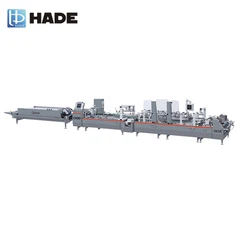
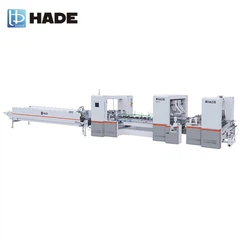
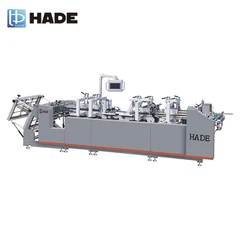
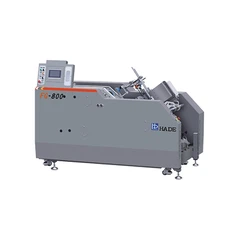
At our company, we offer a wide range of Box Folding and Gluing Machines with different power sources to meet the diverse needs of our customers. Our Automatic Corrugated Box Making Machine is available in both electric and pneumatic models, providing high - quality box production with customizable features. Our High - wave Folder Gluer Machine utilizes advanced dual - powered technology to achieve a balance between precision and high - force output. And our Fully Automatic Lock Bottom Folder Gluer offers state - of - the - art electric control systems for seamless and efficient box production.
If you are in the market for a Box Folding and Gluing Machine, we encourage you to contact us for a detailed discussion about your specific requirements. Our team of experts is ready to assist you in choosing the right machine with the most suitable power source for your business. We can provide in - depth product information, technical support, and competitive pricing. Let's work together to enhance your box - making production and achieve greater success.
References
- "Industrial Machinery Handbook", McGraw - Hill
- "Pneumatic Systems Design and Application", Elsevier
- "Electric Motor Drives: Modeling, Analysis, and Control", CRC Press