

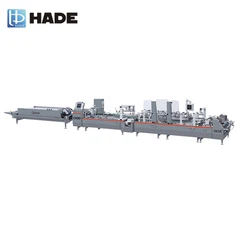

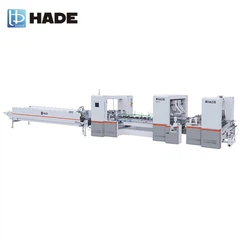
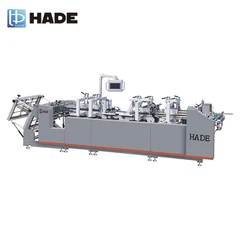
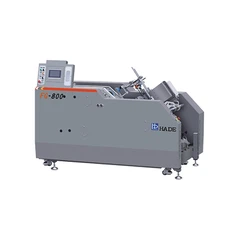
Hey there! As a supplier of Inkject and Turnover machines, I'm stoked to share some insights on the programming method for these nifty pieces of equipment.
So, first off, let's understand what an Inkject and Turnover machine does. It's a key player in the production line, especially in industries where you need to inject ink precisely and then turn over the product for further processing. Whether it's in the packaging industry, printing, or even some high - tech manufacturing, these machines are super important.
Understanding the Basics of Programming
When it comes to programming an Inkject and Turnover machine, you've got to start with the basics. You need to have a clear idea of what the machine is supposed to do. What kind of ink injection pattern do you want? How many times does the product need to be turned over? And at what speed should all these operations happen?
The programming usually involves setting up a sequence of steps. For example, the first step might be to move the product into the ink injection area. Then, you set the parameters for the ink injection, like the amount of ink, the pressure, and the duration of the injection. After that, you program the machine to turn the product over.
Using the Control Panel
Most Inkject and Turnover machines come with a user - friendly control panel. This is where you'll do most of your programming. On the control panel, you can find buttons, touchscreens, or even a combination of both.
Let's say you want to set the ink injection parameters. You'd navigate to the relevant section on the control panel. There, you might have sliders or numerical input fields to adjust the amount of ink, the pressure, etc. It's like adjusting the settings on your home coffee maker, but a bit more technical.
For the turnover function, you can set the angle of the turnover, the speed at which it happens, and whether it's a single or multiple turnover. You can also set up how many times the product should be turned over.
Incorporating Sensors
Sensors play a huge role in the programming of these machines. They help the machine understand the position of the product, the amount of ink in the reservoir, and other important factors.
For instance, a position sensor can detect when the product has reached the ink injection area. Once the sensor sends a signal to the control system, the machine knows it's time to start the ink injection process. Similarly, an ink level sensor can let you know when it's time to refill the ink reservoir.
When programming, you need to integrate these sensors into the overall sequence. You tell the machine what to do based on the signals it receives from the sensors. If the position sensor indicates that the product is not in the right place, the machine won't start the ink injection.
Creating Programs for Different Products
One of the great things about Inkject and Turnover machines is their flexibility. You can create different programs for different products.
Let's say you're producing two different types of packaging boxes. One box might require a different ink injection pattern and turnover sequence compared to the other. You can create separate programs for each type of box.


To do this, you save the settings for each product as a program on the control panel. When you're ready to produce a particular product, you simply select the corresponding program from the list. It's like having a playlist of your favorite songs on your music app, but instead, it's a playlist of production programs.
Testing and Fine - Tuning
Once you've programmed the machine, it's time to test it. You start with a small batch of products to see if everything is working as expected.
During the test run, you might notice that the ink injection is not as accurate as you'd like, or the turnover is a bit too fast. This is where fine - tuning comes in. You go back to the control panel and make small adjustments to the parameters.
You keep repeating the test runs and fine - tuning until you get the perfect results. It might take a few tries, but it's worth it to ensure high - quality production.
The Role of Related Equipment
Now, let's talk about some related equipment that can work in tandem with the Inkject and Turnover machine.
Pneumatic Conveying Equipment can be used to move the products around in the production line. It uses air pressure to transport the products smoothly and efficiently. This can be really useful when you need to move the products between different stages of the production process, like from the ink injection area to the turnover area.
Grinder Used On Folder Gluer can be used to prepare the surface of the product before ink injection. It can smooth out any rough edges or uneven surfaces, which can improve the quality of the ink injection.
Automatic Gluing Pump can be used if your product requires gluing at some point in the process. It can precisely control the amount of glue applied, which is important for a strong and neat bond.
Conclusion and Call to Action
In conclusion, programming an Inkject and Turnover machine is a combination of understanding the basics, using the control panel effectively, integrating sensors, creating customized programs, and fine - tuning. With the right programming, these machines can significantly improve the efficiency and quality of your production process.
If you're in the market for an Inkject and Turnover machine or have any questions about programming them, we'd love to hear from you. Our team of experts is always ready to help you with your production needs. Whether you're a small business just starting out or a large - scale manufacturer looking to upgrade your equipment, we've got the solutions for you. Reach out to us for a free consultation and let's discuss how we can take your production to the next level.
References
- General knowledge of Inkject and Turnover machine operations
- Industry best practices for programming industrial machines