


As a supplier of High Speed Inspection Machines, I often get asked about the response time of these nifty pieces of equipment. It's a crucial factor that can make or break a production line, so let's dive right in and figure out what response time really means in the context of a High Speed Inspection Machine.
First off, what do we mean by "response time"? In simple terms, it's the time it takes for the inspection machine to detect a defect or an issue in the product being inspected and then take appropriate action. This action could be anything from flagging the defective item for removal to sending a signal to the production line to adjust its settings.
Now, the response time of a High Speed Inspection Machine can vary widely depending on a bunch of factors. One of the most significant factors is the type of inspection technology being used. For example, machines that use advanced optical sensors can detect defects much faster than those that rely on older, more basic technologies. These optical sensors can capture images of the product at high speeds and analyze them in real-time to identify any anomalies.
Another factor that affects response time is the complexity of the inspection task. If you're just looking for simple defects like cracks or scratches on the surface of a product, the machine can usually respond pretty quickly. But if you're trying to detect more subtle defects, such as variations in color or texture, the response time might be a bit longer. This is because the machine has to do more complex image processing and analysis to identify these types of defects.
The speed of the production line also plays a big role in determining the response time. If the line is running at a high speed, the inspection machine needs to be able to keep up and detect defects in a timely manner. Otherwise, defective products might slip through the cracks and end up in the final output. That's why it's important to choose an inspection machine that is designed to handle the specific speed of your production line.
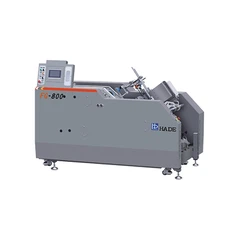
Let's talk about some real-world examples to give you a better idea of how response time works. Suppose you're using a Single Sheet Inspection Machine to inspect printed sheets. These machines are often used in the printing industry to ensure that each sheet is free of defects before it goes on to the next stage of production. The response time of a single sheet inspection machine is typically very fast, usually in the range of milliseconds. This allows it to quickly detect any issues like misprints, smudges, or missing elements on the sheet and take appropriate action, such as rejecting the defective sheet.
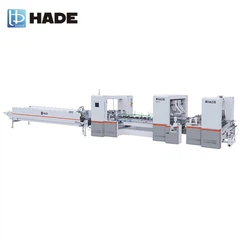
Now, let's consider an Automatic Folder Gluer Machine with Camera System. These machines are used to fold and glue cartons, and the camera system is used to inspect the cartons for defects during the production process. The response time of the camera system is crucial here because it needs to be able to detect any problems with the folding or gluing process in real-time. If the response time is too slow, it could result in a large number of defective cartons being produced before the issue is detected.
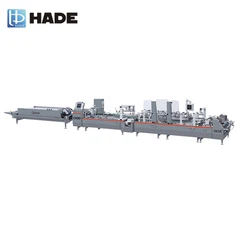
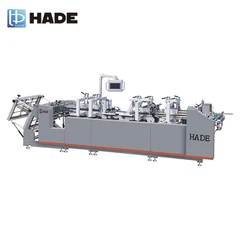
Finally, let's look at a Fully Automatic Folder Gluer with Inspection. This type of machine combines the functions of a folder gluer and an inspection system into one integrated unit. The response time of the inspection system in a fully automatic folder gluer is designed to be as fast as possible to ensure that the entire production process runs smoothly. It can quickly detect any defects in the cartons as they are being folded and glued and make adjustments to the machine settings if necessary.
So, how can you ensure that your High Speed Inspection Machine has the optimal response time for your production needs? First, you need to choose a machine that is equipped with the latest inspection technology. Look for machines that use high-resolution cameras, advanced image processing algorithms, and fast data transfer rates. These features will help the machine detect defects more accurately and quickly.
Second, make sure to calibrate the machine regularly. Over time, the performance of the inspection machine can degrade, which can affect its response time. By calibrating the machine on a regular basis, you can ensure that it is operating at its peak performance and detecting defects with the highest level of accuracy.
Finally, train your operators properly. Your operators need to understand how the inspection machine works and how to interpret the results. They should also know what to do in case a defect is detected. By providing your operators with comprehensive training, you can ensure that they are able to use the inspection machine effectively and make the most of its capabilities.
In conclusion, the response time of a High Speed Inspection Machine is a critical factor that can have a significant impact on the quality and efficiency of your production process. By understanding the factors that affect response time and taking steps to optimize it, you can ensure that your inspection machine is able to detect defects quickly and accurately, helping you to produce high-quality products and minimize waste.
If you're interested in learning more about our High Speed Inspection Machines or have any questions about how they can improve your production line, feel free to reach out to us. We're always happy to have a chat and see how we can help you take your production to the next level.
References


- Industry reports on inspection machine technologies
- Manufacturer's specifications for High Speed Inspection Machines