


As a supplier of Box Folder Gluer Machines, one of the most frequently asked questions I encounter is whether these machines can work with different types of paper. In this blog post, I'll delve into this topic, exploring the capabilities of our machines and how they can adapt to various paper materials.
Understanding the Basics of Box Folder Gluer Machines
Before we discuss the compatibility with different paper types, let's briefly understand what a Box Folder Gluer Machine does. A Box Folder Gluer Machine is a piece of equipment used in the packaging industry to fold and glue paperboard or cardboard into boxes. It streamlines the box - making process, increasing efficiency and precision.
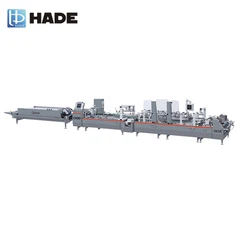
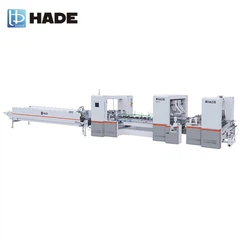
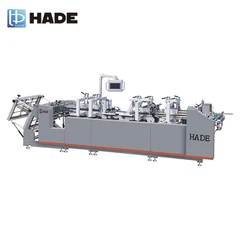
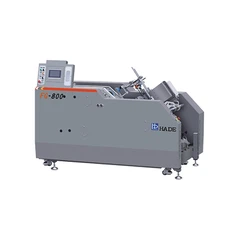
Our company offers a range of folder gluer machines, including the High - wave Folder Gluer Machine, Carton Folding and Gluing Machine, and Automatic Carton Forming Machine. Each machine is designed with advanced technology to handle different production requirements.
Types of Paper and Their Characteristics
There are several types of paper commonly used in the packaging industry, and each has its own unique properties that can affect the performance of a Box Folder Gluer Machine.


Kraft Paper
Kraft paper is a strong and durable type of paper made from wood pulp. It has high tear resistance and is often used for shipping boxes. The natural brown color of kraft paper gives it a rustic look, which is popular in eco - friendly packaging. Our machines can easily handle kraft paper due to its relatively uniform texture and strength. The folding mechanism can apply the right amount of pressure to fold the kraft paper accurately, and the gluing system can bond the edges securely.
Coated Paper
Coated paper has a smooth and shiny surface, which is achieved by applying a thin layer of coating material such as clay. It is commonly used for high - end packaging, such as gift boxes and cosmetic packaging. While the smooth surface of coated paper can pose a challenge for gluing, our Box Folder Gluer Machines are equipped with specialized gluing systems. These systems can adjust the glue application according to the surface characteristics of the coated paper, ensuring a strong and reliable bond.
Corrugated Cardboard
Corrugated cardboard consists of a fluted layer sandwiched between two flat linerboards. It is known for its excellent cushioning properties and is widely used for protecting fragile items during shipping. Our machines can handle different thicknesses of corrugated cardboard. The folding mechanism is designed to accommodate the fluted structure, and the gluing system can bond the linerboards and the fluted layer together effectively.
Chipboard
Chipboard is a lightweight and inexpensive type of paperboard made from recycled paper. It is often used for lightweight packaging, such as cereal boxes and shoe boxes. Our Box Folder Gluer Machines can handle chipboard with ease. The adjustable folding and gluing settings allow for precise control when working with this relatively soft and flexible material.
Factors Affecting Compatibility
While our machines are designed to work with a wide range of paper types, there are several factors that can affect their compatibility.
Paper Thickness
The thickness of the paper is an important factor. If the paper is too thick, the folding mechanism may struggle to apply enough pressure to fold it properly. On the other hand, if the paper is too thin, it may tear during the folding process. Our machines have adjustable settings for the folding pressure, which can be customized according to the thickness of the paper.
Paper Moisture Content
The moisture content of the paper can also impact the performance of the Box Folder Gluer Machine. Paper with high moisture content may be more prone to wrinkling during folding, and the glue may not dry properly. Conversely, paper that is too dry can become brittle and difficult to fold. Our machines can operate within a certain range of paper moisture content, but it is recommended to store the paper in a controlled environment to maintain its optimal moisture level.
Surface Roughness
The surface roughness of the paper affects the gluing process. Rough - surfaced papers may require more glue to achieve a strong bond, while smooth - surfaced papers may need a different type of glue or a specialized gluing technique. Our machines are equipped with adjustable glue applicators that can adapt to different surface roughness levels.
How Our Machines Adapt to Different Paper Types
Our Box Folder Gluer Machines are designed with advanced technology to adapt to different paper types.
Adjustable Folding Mechanisms
The folding mechanisms in our machines can be adjusted to accommodate different paper thicknesses and stiffness. The pressure applied during folding can be fine - tuned to ensure accurate and clean folds. For example, when working with thick corrugated cardboard, the folding mechanism can increase the pressure to fold the cardboard smoothly, while for thin coated paper, it can reduce the pressure to prevent tearing.
Specialized Gluing Systems
Our gluing systems are designed to handle different types of paper surfaces. They can adjust the amount, pattern, and viscosity of the glue according to the characteristics of the paper. For coated paper, the gluing system can apply a thin and even layer of glue to ensure a strong bond without leaving any visible glue marks. For porous papers like kraft paper, the system can increase the glue penetration to enhance the bonding strength.
Advanced Control Systems
Our machines are equipped with advanced control systems that allow operators to program and adjust various parameters. These parameters include folding speed, gluing amount, and pressure settings. Operators can easily switch between different paper types by simply adjusting these parameters on the control panel, making the production process more flexible and efficient.
Case Studies
Let's take a look at some real - world examples of how our Box Folder Gluer Machines have worked with different types of paper.
Case 1: A Cosmetics Company
A cosmetics company needed to produce high - end gift boxes using coated paper. They were concerned about the gluing quality on the smooth surface of the coated paper. After installing our Carton Folding and Gluing Machine, they were able to achieve excellent gluing results. The machine's specialized gluing system adjusted the glue application to ensure a strong and invisible bond, and the adjustable folding mechanism folded the coated paper accurately, meeting the company's high - quality packaging requirements.
Case 2: A Shipping Company
A shipping company required a large number of shipping boxes made from kraft paper. Our High - wave Folder Gluer Machine was able to handle the kraft paper efficiently. The machine's robust folding mechanism could fold the kraft paper quickly and precisely, and the gluing system provided a reliable bond. This increased the company's production efficiency and reduced the number of defective boxes.
Conclusion
In conclusion, our Box Folder Gluer Machines are capable of working with different types of paper, including kraft paper, coated paper, corrugated cardboard, and chipboard. Through adjustable folding mechanisms, specialized gluing systems, and advanced control systems, our machines can adapt to the unique properties of each paper type. Whether you are in the business of high - end packaging or shipping boxes, our machines can meet your production needs.
If you are interested in our Box Folder Gluer Machines and want to discuss how they can work with your specific paper requirements, please feel free to contact us for a consultation. We are always ready to help you find the best solution for your packaging production.
References
- Packaging Machinery Manufacturers Institute. (2023). Technical Guide to Folder Gluer Machines.
- Smith, J. (2022). Paper Types and Their Applications in Packaging. Journal of Packaging Science, 15(2), 34 - 45.
- Brown, A. (2021). Advances in Folding and Gluing Technology for the Packaging Industry. Packaging Technology Review, 22(3), 67 - 78.