

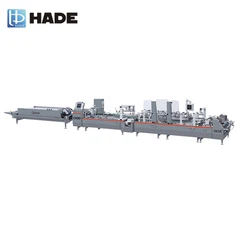

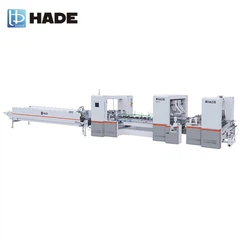
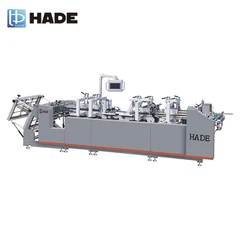
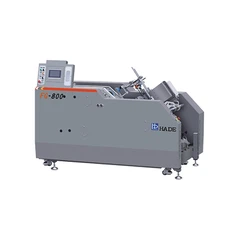
In the realm of printing and packaging, ensuring the quality of printed sheets is of utmost importance. Misaligned prints can lead to significant issues, from customer dissatisfaction to increased production costs. As a supplier of Single Sheet Inspection Machines, I am often asked whether our machines can detect misaligned prints on sheets. In this blog post, I will delve into the capabilities of our Single Sheet Inspection Machines in detecting misaligned prints and explore the technology behind this crucial functionality.
Understanding Misaligned Prints
Misaligned prints occur when the printed image on a sheet is not positioned correctly. This can happen due to various reasons, such as mechanical issues in the printing press, incorrect registration settings, or problems with the substrate. Misaligned prints can manifest in different ways, including offset prints, tilted images, or inconsistent margins. These issues can be particularly problematic in industries where precision is key, such as packaging, labels, and high - end printing.
How Single Sheet Inspection Machines Work
Our Single Sheet Inspection Machines are equipped with state - of - the - art technology designed to detect a wide range of print defects, including misaligned prints. At the core of these machines are high - resolution cameras and advanced image processing algorithms.
The high - resolution cameras capture detailed images of each printed sheet as it passes through the inspection area. These cameras are capable of capturing images at a very high speed, ensuring that every sheet in a production run is inspected thoroughly. The captured images are then sent to the machine's image processing unit.
The image processing algorithms are the brains behind the detection of misaligned prints. These algorithms analyze the captured images and compare them to a pre - defined reference image. The reference image represents the ideal print layout, with all elements correctly positioned. By comparing the actual print on the sheet with the reference image, the algorithm can identify any deviations in the position of the printed elements.
Detecting Different Types of Misaligned Prints
Offset Prints
Offset prints occur when the entire printed image is shifted horizontally or vertically on the sheet. Our Single Sheet Inspection Machines can easily detect this type of misalignment. The image processing algorithm measures the position of key features in the printed image, such as the edges of text or graphics, and compares them to the corresponding positions in the reference image. If the measured positions deviate beyond a pre - set tolerance, the machine flags the sheet as having an offset print.


Tilted Images
Tilted images are another common type of misaligned print. In this case, the printed image is rotated slightly on the sheet. Our machines can detect tilted images by analyzing the orientation of straight lines in the printed image. The algorithm looks for features such as the edges of boxes or the lines of text and calculates their angles. If the calculated angles deviate from the expected angles in the reference image, the machine identifies the sheet as having a tilted image.
Inconsistent Margins
Inconsistent margins occur when the space between the printed image and the edges of the sheet is not uniform. This can make the print look unprofessional and may cause issues during the subsequent packaging or finishing processes. Our Single Sheet Inspection Machines can detect inconsistent margins by measuring the distances between the edges of the printed image and the edges of the sheet. If these distances vary beyond the acceptable tolerance, the machine flags the sheet as having inconsistent margins.
Benefits of Detecting Misaligned Prints
Detecting misaligned prints early in the production process offers several benefits. Firstly, it helps to maintain high - quality standards. By identifying and removing sheets with misaligned prints, manufacturers can ensure that only products of the highest quality reach the market. This can enhance the brand reputation and customer satisfaction.
Secondly, it reduces production costs. Misaligned prints often result in wasted materials and increased rework. By detecting these issues early, manufacturers can avoid producing large quantities of defective products, saving on materials, labor, and time.
Real - World Applications
Our Single Sheet Inspection Machines have been successfully used in a variety of industries. In the packaging industry, for example, accurate print alignment is crucial for the proper functioning of Automatic Inspection and Folder Gluer Machine. Misaligned prints on packaging boxes can cause problems during the folding and gluing process, leading to rejects and production delays. Our machines can detect misaligned prints on packaging sheets before they enter the folder gluer, ensuring smooth production.
In the label printing industry, misaligned prints can make labels look unprofessional and may cause issues during the labeling process. Our High Speed Inspection Machine can quickly and accurately detect misaligned prints on labels, allowing manufacturers to maintain high - quality standards in their label production.
For those in need of a comprehensive solution that combines inspection and folder gluing capabilities, our Fully Automatic Folder Gluer with Inspection is an ideal choice. This machine not only inspects for misaligned prints but also performs the folding and gluing operations, streamlining the production process.
Contact for Procurement and洽谈
If you are in the market for a Single Sheet Inspection Machine to detect misaligned prints and improve the quality of your printed products, we would be delighted to discuss your requirements. Our team of experts can provide you with detailed information about our machines, their features, and how they can be customized to meet your specific needs.
References
- Smith, J. (2018). Advanced Image Processing Techniques for Print Inspection. Journal of Printing Technology, 25(3), 45 - 56.
- Johnson, M. (2019). Quality Control in the Printing Industry: The Role of Inspection Machines. Packaging and Printing Review, 32(2), 78 - 85.
- Brown, A. (2020). High - Speed Camera Technology for Print Inspection. Imaging Science Journal, 40(4), 123 - 135.