

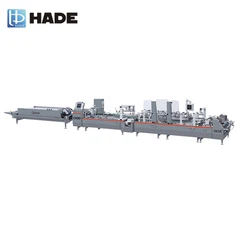

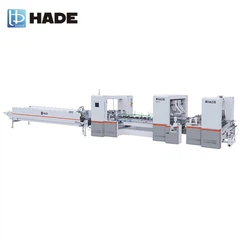
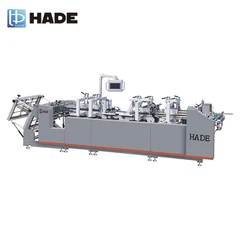
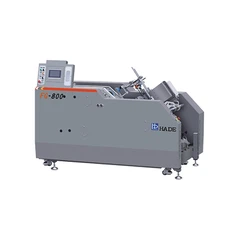
As a trusted supplier of Box Folding and Gluing Machines, I understand that the installation of a large - scale machine is a critical process that requires careful planning and attention to detail. In this blog, I will discuss the key installation requirements for a large - scale Box Folding and Gluing Machine to ensure its smooth operation and optimal performance.
1. Site Preparation
Space Requirements
A large - scale Box Folding and Gluing Machine is a substantial piece of equipment that demands an adequate amount of space. First, measure the dimensions of the machine from the manufacturer's specifications. This typically includes the length, width, and height of the machine, as well as any additional space needed for loading and unloading materials. You should also account for clearance around the machine for maintenance access. A general rule of thumb is to leave at least 1 - 2 meters of clearance on all sides of the machine.
The site should be large enough to accommodate not only the machine itself but also the associated conveyors, if any. For example, if you have an Automatic Carton Folding Machine that is part of a larger production line, you need to ensure that there is sufficient space for the conveyors to move the cartons between different stations.
Floor Strength
The floor where the machine will be installed must be able to support the weight of the machine. Large - scale Box Folding and Gluing Machines can be quite heavy, often weighing several tons. Consult the machine's technical documentation to determine its exact weight. Then, have a structural engineer assess the floor's load - bearing capacity. In most industrial settings, a concrete floor is preferred as it can usually withstand the heavy load. If the floor is not strong enough, reinforcement may be required before installation.

Lighting and Ventilation
Proper lighting is essential for the safe and efficient operation of the machine. The installation area should have sufficient natural or artificial light to allow operators to clearly see the machine's controls, the folding and gluing processes, and any potential hazards.
Good ventilation is also crucial. The gluing process in a Box Folding and Gluing Machine may involve the use of adhesives that emit fumes. Adequate ventilation helps to remove these fumes from the working environment, protecting the health of the operators and preventing the accumulation of potentially flammable or harmful gases.
2. Power Supply
Voltage and Amperage
The large - scale Box Folding and Gluing Machine requires a stable and appropriate power supply. Check the machine's electrical specifications for the required voltage and amperage. Different machines may have different power requirements, depending on their size, features, and the number of motors and other electrical components.
It is essential to ensure that the electrical supply at the installation site can meet these requirements. If necessary, consult an electrician to install a dedicated electrical circuit for the machine to avoid overloading the existing electrical system.
Electrical Wiring
Proper electrical wiring is crucial for the safe operation of the machine. All wiring should be installed in accordance with local electrical codes and standards. Use high - quality electrical cables that are rated for the machine's power requirements. The wiring should be protected from damage, such as being crushed or cut, and should be properly grounded to prevent electrical shocks and short - circuits.
3. Machine Assembly
Unpacking and Inspection
Upon delivery of the large - scale Box Folding and Gluing Machine, carefully unpack it and inspect all the components for any damage during transit. Check for loose parts, missing components, or any visible signs of damage to the machine's structure, motors, or other parts. If any damage is found, immediately contact the shipping company and the manufacturer to resolve the issue.
Assembly Process
The assembly of a large - scale Box Folding and Gluing Machine can be a complex process. It is recommended that the installation be carried out by trained technicians, either from the manufacturer or a qualified third - party service provider. The technicians should follow the detailed assembly instructions provided by the manufacturer.
During the assembly process, ensure that all components are correctly aligned and securely fastened. This includes connecting the mechanical parts, such as the folding and gluing mechanisms, and the electrical components, such as the control panels and motors.

4. Alignment and Calibration
Mechanical Alignment
Proper mechanical alignment is essential for the accurate folding and gluing of boxes. The folding and gluing mechanisms need to be precisely aligned to ensure that the boxes are folded at the correct angles and glued securely. Use precision measuring tools, such as laser alignment devices, to ensure that all moving parts are in the correct position.
Glue Application Calibration
The gluing system of the Box Folding and Gluing Machine also needs to be calibrated. This involves setting the correct amount of glue to be applied to the boxes. Too much glue can cause mess and waste, while too little glue may result in poor adhesion. Adjust the glue flow rate, pressure, and application pattern according to the type of boxes being produced and the requirements of the adhesive used.
5. Training and Documentation
Operator Training
Once the machine is installed and calibrated, it is crucial to provide comprehensive training to the operators. The training should cover all aspects of the machine's operation, including how to load materials, set up the machine for different box sizes and styles, operate the control panel, and perform basic maintenance tasks.
The training can be provided by the manufacturer's technical support team or through on - site training sessions. It is important that the operators are fully trained and confident in operating the machine before it is put into full - scale production.
Documentation
Keep all the relevant documentation for the machine, including the installation manual, operation manual, maintenance manual, and parts catalog. These documents are essential for future reference, troubleshooting, and maintenance. They should be stored in a safe and easily accessible location.
6. Testing and Commissioning
Initial Testing
After the machine is assembled, aligned, and calibrated, conduct initial testing to ensure that all components are working properly. Start the machine at a low speed and run it through a few test cycles without any boxes. Check for any abnormal noises, vibrations, or malfunctions.
Production Testing
Once the initial testing is successful, perform production testing with actual boxes. Produce a small batch of boxes to verify the quality of the folding and gluing. Check the box dimensions, the strength of the glue joints, and the overall appearance of the boxes. Make any necessary adjustments to the machine settings based on the test results.

Commissioning
After the production testing is satisfactory, the machine can be commissioned for full - scale production. At this stage, it is important to closely monitor the machine's performance and the quality of the products being produced. Continuously optimize the machine settings to achieve the best possible results.
In conclusion, the installation of a large - scale Box Folding and Gluing Machine is a complex process that requires careful planning, proper site preparation, accurate assembly, alignment, and calibration, as well as comprehensive training and testing. By following these installation requirements, you can ensure that your machine operates smoothly and efficiently, producing high - quality boxes.
If you are interested in our Box Folding and Gluing Machine or our Full Automatic Mini - box Making Machine, please feel free to contact us for more information and to discuss your specific requirements. We are committed to providing you with the best solutions for your box - making needs.
References
- Manufacturer's installation and operation manuals for Box Folding and Gluing Machines.
- Local electrical and building codes and standards.
- Industry best practices for the installation and maintenance of industrial machinery.