


As a supplier of Box Folder Gluer Machines, I often get asked about the maximum and minimum box sizes these machines can handle. It's a crucial question for businesses looking to invest in such equipment, as it directly impacts the range of products they can produce. In this blog post, I'll break down the factors that determine these size limits and give you a better understanding of what to expect.


Understanding the Basics of Box Folder Gluer Machines
Before we dive into the size limits, let's quickly go over what a Box Folder Gluer Machine does. These machines are used to fold and glue cardboard or paperboard to create boxes. They're a key part of the packaging industry, helping companies produce boxes of all shapes and sizes efficiently.
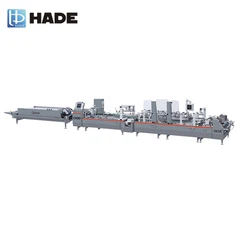
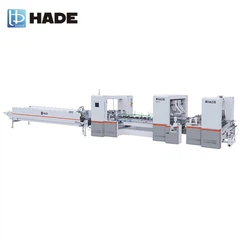
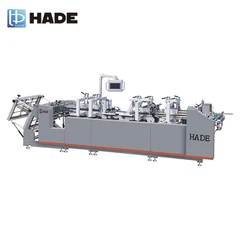
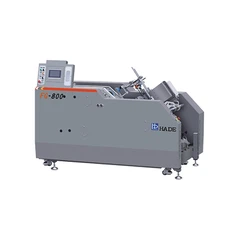
There are different types of Box Folder Gluer Machines, each with its own capabilities. For example, the Automatic Carton Folding Machine is designed for high-speed production of cartons, while the Automatic Folder Gluer Machine can handle a wider range of box styles. The Corrugated Box Folder Gluer Machine is specifically built for corrugated cardboard, which is thicker and more rigid than regular paperboard.
Factors Affecting Box Size Limits
Several factors come into play when determining the maximum and minimum box sizes a Box Folder Gluer Machine can handle. Here are the main ones:
Machine Design and Structure
The physical design of the machine is a major factor. The size of the feeder, the folding and gluing stations, and the delivery system all limit the size of the boxes that can be processed. For example, if the feeder is too narrow, it won't be able to accept large sheets of cardboard. Similarly, if the folding and gluing stations are too small, they won't be able to handle large boxes.
Material Thickness
The thickness of the cardboard or paperboard also affects the size limits. Thicker materials are more rigid and require more force to fold and glue. As a result, machines may have a lower maximum size limit for thicker materials. On the other hand, very thin materials may be more difficult to handle, especially at high speeds, which can also limit the minimum size.
Folding and Gluing Mechanisms
The type of folding and gluing mechanisms used in the machine can also impact the size limits. Some machines use mechanical folding systems, while others use vacuum or air-assisted folding. Mechanical systems may be more suitable for larger boxes, while vacuum or air-assisted systems can be more precise and better for smaller boxes.
Production Speed
The speed at which the machine operates can also affect the size limits. Faster production speeds may require larger boxes to maintain efficiency, as smaller boxes may take longer to process. Conversely, slower speeds may allow for more precise handling of smaller boxes.
Typical Maximum and Minimum Box Sizes
Now that we understand the factors affecting box size limits, let's look at some typical maximum and minimum sizes for different types of Box Folder Gluer Machines.
Automatic Carton Folding Machine
These machines are typically designed for high-speed production of cartons. The minimum box size can range from around 50mm x 50mm to 100mm x 100mm, depending on the machine's design and the material thickness. The maximum box size can be up to 800mm x 600mm or even larger, again depending on the machine and the material.
Automatic Folder Gluer Machine
Automatic Folder Gluer Machines are more versatile and can handle a wider range of box styles. The minimum box size is usually similar to that of the Automatic Carton Folding Machine, around 50mm x 50mm to 100mm x 100mm. The maximum box size can be larger, up to 1000mm x 800mm or more, depending on the machine's capabilities.
Corrugated Box Folder Gluer Machine
Corrugated Box Folder Gluer Machines are designed for corrugated cardboard, which is thicker and more rigid than regular paperboard. The minimum box size can be around 100mm x 100mm, while the maximum box size can be up to 2000mm x 1500mm or even larger, depending on the machine and the material.
Customizing Box Size Limits
In some cases, businesses may need to produce boxes that are outside the typical size limits of a Box Folder Gluer Machine. Fortunately, many machines can be customized to handle specific box sizes. This may involve modifying the feeder, the folding and gluing stations, or the delivery system.
However, it's important to note that customizing a machine can be expensive and may require additional lead time. Before investing in a customized machine, it's important to work with a reputable supplier who can provide expert advice and support.
Conclusion
The maximum and minimum box sizes that a Box Folder Gluer Machine can handle depend on several factors, including the machine's design, the material thickness, the folding and gluing mechanisms, and the production speed. By understanding these factors, businesses can choose the right machine for their needs and ensure that they can produce boxes of the desired sizes efficiently.
If you're in the market for a Box Folder Gluer Machine, I encourage you to reach out to us. We have a wide range of machines to choose from, and our team of experts can help you find the right one for your business. Whether you need a machine for high-speed production of cartons or a more versatile machine for a wider range of box styles, we can provide the solution you need.
References
- Packaging Machinery Manufacturers Institute (PMMI). (2023). Box Folding and Gluing Machines: A Guide to Selection and Operation.
- Carton Machinery Association. (2023). Technical Specifications for Box Folder Gluer Machines.